
Transgender Representation in Fantasy Fiction
A look into the past
Despite the extraordinary possibilities of fantasy fiction, its early iterations in the 19th century reflected the heterocentric standard of the time. Described as the genre of “what if”, mainstream fantasy still suffers from “persistent conservatism” when it comes to queer, let alone transgender representation (Kenneally, 2016, pg. 9). Though dragons may be fought, and civilisations rebuilt, speculative writers of the 19th century remained “unselfconscious in their reproduction of the heteronormative environment in which they were written” (Pearson and Kenneally, 2016, pg. 9). However, as within a rigid heteronormative society, queerness is a “consistent, marginal, and often hidden presence within the genre” (Kenneally, 2016, pg. 10). Though, how sexuality is represented within fantasy fiction is beyond the scope of this literature review, overtly queer characters appeared in fantasy texts before transgender representation. Transness, when it appears, is cloaked and side-stepped, in that characters are “transgender by association rather than by explicit presentation” (Kenneally, 2016, pg. 202).
Magical transformations
A magical transformation between genders is an early example of explorations into transgender embodiment. Whether by magic, curses, or divine intervention, characters suddenly become the other sex. This tropehas a long history in folklore and myth, such as in the Greek myth of Tiresias, who is transformed from male to female and back again after striking a pair of mating snakes. Or within the tale of Hermaphroditus, who is attacked by Salmacis who desires his divine beauty, and in that attack, the two merge to embody male and female aspects.
In modern fantasy examples, such as Gael Baudino’s ‘Dragonsword’ Trilogy (1988 to 1992), a number of men are permanently transformed into women. These characters are cisgender before their transformation and suffer greatly in their new bodies and role in society. It is in the painful experience of “sex/gender disparity” that these characters can be read as transgender (Kenneally, 2016, pg. 203). The characters cross the bodily divide between sexes, and become immediately legible as the other sex. The transformation is instantaneous and on the level of flesh, fantastical. This trope appears again in Judith Tarr’s A Fall of Princes (1988) wherein a prince undergoes the transformation from male to female willingly for political reasons. Although she doesn't suffer quite as much as the characters in Baudino’s work, the new princess does experience the anxieties of social transitioning, such as coming out and pronoun usage. Representation of transness through the creation of “analogous transgender characters” was a way to explore the transgender experience from a safe distance but does little to normalise transness on a broader scale (Kenneally, 2016, pg. 204). On one hand, the magical transformation trope is often linked with a gained “insight into experiences of a more comprehensive humanity by overcoming the seeming gender disjunctions” (Klonkowska & Bonvissuto, 2019, p.67). However, in modern Western society, transgender individuals are not afforded this respect but are instead pathologised and dismissed. This trope also reinforces the pervasive “wrong-body” paradigm, which is a simplistic narrative of transness that inherently frames “non-trans as right” and transgender “embodiment as dangerous, unsettling, impure” (Nirta, 2021, p. 340).
A look into the past
Despite the extraordinary possibilities of fantasy fiction, its early iterations in the 19th century reflected the heterocentric standard of the time. Described as the genre of “what if”, mainstream fantasy still suffers from “persistent conservatism” when it comes to queer, let alone transgender representation (Kenneally, 2016, pg. 9). Though dragons may be fought, and civilisations rebuilt, speculative writers of the 19th century remained “unselfconscious in their reproduction of the heteronormative environment in which they were written” (Pearson and Kenneally, 2016, pg. 9). However, as within a rigid heteronormative society, queerness is a “consistent, marginal, and often hidden presence within the genre” (Kenneally, 2016, pg. 10). Though, how sexuality is represented within fantasy fiction is beyond the scope of this literature review, overtly queer characters appeared in fantasy texts before transgender representation. Transness, when it appears, is cloaked and side-stepped, in that characters are “transgender by association rather than by explicit presentation” (Kenneally, 2016, pg. 202).
Magical transformations
A magical transformation between genders is an early example of explorations into transgender embodiment. Whether by magic, curses, or divine intervention, characters suddenly become the other sex. This tropehas a long history in folklore and myth, such as in the Greek myth of Tiresias, who is transformed from male to female and back again after striking a pair of mating snakes. Or within the tale of Hermaphroditus, who is attacked by Salmacis who desires his divine beauty, and in that attack, the two merge to embody male and female aspects.
In modern fantasy examples, such as Gael Baudino’s ‘Dragonsword’ Trilogy (1988 to 1992), a number of men are permanently transformed into women. These characters are cisgender before their transformation and suffer greatly in their new bodies and role in society. It is in the painful experience of “sex/gender disparity” that these characters can be read as transgender (Kenneally, 2016, pg. 203). The characters cross the bodily divide between sexes, and become immediately legible as the other sex. The transformation is instantaneous and on the level of flesh, fantastical. This trope appears again in Judith Tarr’s A Fall of Princes (1988) wherein a prince undergoes the transformation from male to female willingly for political reasons. Although she doesn't suffer quite as much as the characters in Baudino’s work, the new princess does experience the anxieties of social transitioning, such as coming out and pronoun usage. Representation of transness through the creation of “analogous transgender characters” was a way to explore the transgender experience from a safe distance but does little to normalise transness on a broader scale (Kenneally, 2016, pg. 204). On one hand, the magical transformation trope is often linked with a gained “insight into experiences of a more comprehensive humanity by overcoming the seeming gender disjunctions” (Klonkowska & Bonvissuto, 2019, p.67). However, in modern Western society, transgender individuals are not afforded this respect but are instead pathologised and dismissed. This trope also reinforces the pervasive “wrong-body” paradigm, which is a simplistic narrative of transness that inherently frames “non-trans as right” and transgender “embodiment as dangerous, unsettling, impure” (Nirta, 2021, p. 340).
Villainous and monstrous representation
When transgender characters made their debut into modern media, it was often as a thrilling and unsettling plot twist, such as exposing a serial killer as a transgender woman. Designed for shock value, this trope in representation “plays on the societal fears of and disgust for non-normative gendered behaviour” and bodies (Ophelders, 2019, p. 3). This twist appears across media from Hitchcock’s Psycho (1960)to Pretty Little Liars (2010-2019).
One potent example is the character of Jame Gumb (deemed Buffalo Bill) in The Silence of the Lambs (1988). Though not strictly a fantasy text, the horrifying transgender embodiment of The Silence of Lambs is a crucial moment in trans representation. Gumb is denied access to medical transition and so in the text is deemed not a “real transsexual” (Harris, 1988, p. 187) However, it is clear that this character suffers from gender dysphoria and this denial reflects the reality ofmedical gatekeepingrather than the truth of her identity. Gumb does “not look like a woman” according to the narrator, despite her attempts at transition via illegally-obtained hormone therapy and other interventions (Harris, 1988, p. 155). As she does not pass as a woman, she is pegged in the narrative “as a gender monstrosity because she is unable to conform to normative notions of attractive femininity” (Ophelders, 2019, p. 26). The reader is never given another reason for Gumb’s grotesque actions, suggesting that a “gender identity other than cisgender is a logical motive for the horrific crimes necessary” to fashion a woman suit from the skin of her victims (Ophelders, 2019, p. 27).
The most famous scene from the film adaptation in 1991, is termed Buffalo Bill’s dance scene. Gumb wears the scalp of a victim as a wig, tucks her genitals between her legs and dances seductively in front of a mirror. But it is not primarily the remains of the victim that are used to inspire horror in the audience. Rather, the act of a transgender woman showing her body and how she deals with dysphoria. Having already positioned the audience to fear the character, and then presenting her exposed, donned in part of her girl suit, strongly links transgenderism with those feelings of disgust and fear. Her crimes are linked with her desire “to change” (Harris, 1988, p. 187) and so there is no denying the monstrous representation of this desire. Transness and trans bodies are deployed to create terror in The Silence of the Lambs, which has had a lasting impact on attitudes towards transgender women. Researchers have found that audiences are more likely to be influenced by “evocative” negative representations than by positive or nuanced representations of minorities (Ophelders, Solomon & Kurtz-Costes, 2019, p. 27). Unfortunately, due to the persistence of this dehumanising trope, the transgender community continues to suffer from the transference of “the disgust [audience] have for the killers to real-life trans people” (Ophelders, 2019, p. 27).
Claiming our monstrous power
Gumb’s embodiment is monstrous in the text outside of the clear horror of her skin suit. She is monstrous in her actions and her transness is both denied and made monstrous by association. Monsters are the embodiment of nebulous fears, designed to be stabbed with the hero’s sword and defeated for collective catharsis. Monsters exist in liminal spaces, as “an action or a thing is monstrous when it can’t be processed by our rationality” (Asma, 2011, p. 10). The blinding force of the gender binary has made those that defy its rigid assumptions incomprehensible, this is “because most people have great difficulty recognizing the humanity of another person if they cannot recognize that person’s gender, encounters with gender-changing or gender-challenging people can sometimes feel for others like an encounter with a monstrous and frighteningunhumannes”(Stryker, 2017, p.8).
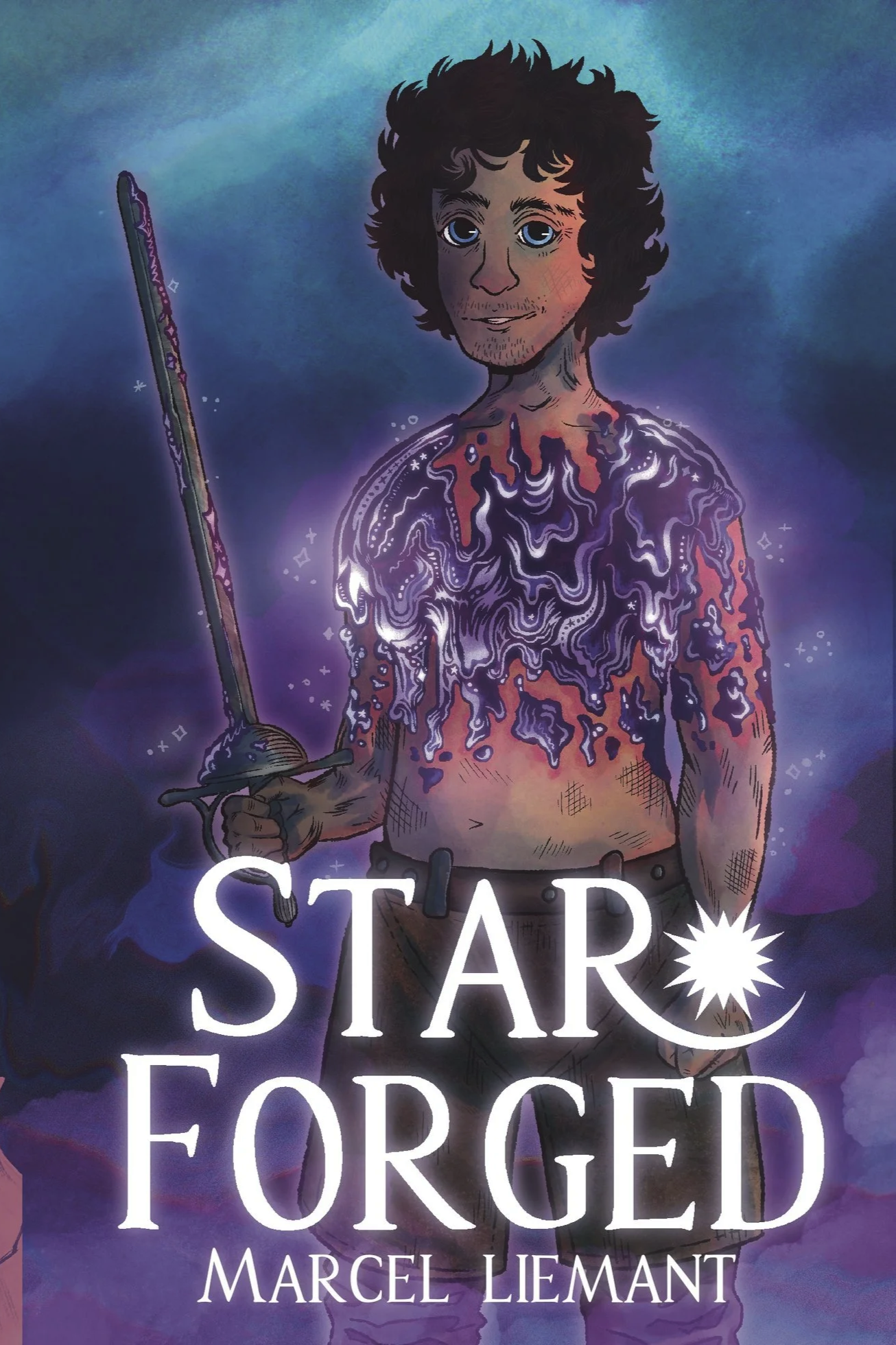
Characters like Gumb and much of theearly transgender representation in the 1980s, were not written by transgender people. However, an important turn in transgender and feminist theory came through Susan Stryker’s vivid reclamation of the monster. Frankenstein’s monster is an outsider with a “medically constructed” body, created and discarded by scientists that both reject and cannot help but try to control the fiend’s unruly form(Stryker, 1994, p. 242). As Stryker writes, as a trans person,“I am too often perceived as less than fully human due to the means of my embodiment; like the monster’s as well, my exclusion from human community fuels a deep and abiding rage in me that I, like the monster, direct against the conditions in which I must struggle to exist” (Stryker, 1994, p.238). Frankenstein’s monster is a powerful reclaimed symbol that acts as a mouthpiece for transgender rage and empowerment. It continues to shape transgender narratives, including my own. Koch-Rein argues that “the monster’s struggle to find a language through which to introduce himself in a way that will stave off seemingly unmediated conclusions drawn from his body speaks to what is at the heart of transgender narrative in a world of binary sex” (Koch-Rein, 2019, p. 51). In Starforged, I aim to capture both the abject reactions to non-normative bodies but also the power that can be borne from diversity.
New trans magical tales
In recent years as tranness has fully emerged into the public eye, a flurry of new trans-lead fantasy stories have entered the arena. The Sunbearer Trials (2022) by Aiden Thomas features Teo, an openly transgender semidiosa in a queer-positive world where transgenderism is normalised. Transness is a celebrated part of Teo’s embodiment as culturally, within the world, gender confirmation ceremonies are a part of the process of growing up. Characters are given a chance to explore and decide upon their gender, even changing pronouns within the series. Teo’s hormone therapy is routine, “Giving himself his weekly dose of T was quick and easy after doing it for so many years” and he considers his top surgery scars to be “badass” (Thomas, 2022, p. 103 & 30). The real-world experiences of transness as ‘the other’ are displaced to his magical embodiment, through his wings.
Teo’s wings aren’t the “brilliant blue and green of male quetzals, but grayish-brown with hints of green like the females’ plumage” (Thomas, 2022, p. 30). Growing up, it was his wings that othered him from his peers, as his classmates were “always staring” (Thomas, 2022, p. 30). They deliver Teo his “first experience with dysphoria”, and initially in the text, he binds them so they are neither usable or visible (Thomas, 2022, p. 30). Though binding his wings is painful, to Teo it is worthwhile and necessary as the discomfort is “nothing compared to the cloying dysphoria that choked him whenever he saw his wings” (Thomas, 2022, p. 31). This is a clear allegory of the transmasculine experience of binding the chest. However, Teo’s wings link him to a history of fantastical embodiment, drenched in defiance. Similarly to the perception of transgender bodies as in-between or in defiance of the gender binary, Teo’s animal-human hybridity challenges categorisation. Even within the fantastical world of The Sunbearer Trials, Teo’s wings are extremely rare, so much so that he experiences otherness. Across texts, outside of Thomas’ work, “fantastic winged people” represent a “developmental deviance”, that represents the “corporeal and cultural deviation” against normative embodiment (Chappell, 2007, p. 76). The weight of Teo’s wings becomes both the pain of dysphoria, and the social weight of marginalisation in a political world.
It is when Teo reclaims his wings that transness as a symbol of self-empowerment and autonomy becomes clear. When Teo is cornered in one of the dangerous trials to become Sunbearer, he releases his wings from his binder and takes flight. To Teo, the “sensation of flying filled his chest with euphoria”, and in embracing his hidden power, his feathers transform from the female patterning to the “feathers of a proper male quetzal” (Thomas, pg 119-120). As a symbol of his dysphoria, as well as his transness, Teo embraces his past embodiment in order to fully inhabit the present. The use of the word euphoria, is a deliberate one, as gender euphoria is a colloquial phrase within the transgender community which describes the joy of connecting with gender-affirming behaviours or embodiment (Hodshire, 2023). This moment then, is one of celebration, which allows for the fantastical embodiment of Teo to make magical what has been traditionally made tragic and monstrous.
Michael Earp’s Ocean Bloom appears in the Avast! Pirate Stories from Transgender Authors anthology (2024). The protagonist, Quinlen, uses they/them pronouns indicating a gender diverse identity. Quin hides a secret through the piece, they guard their “oilskin bag” fiercely, and turn to its secure presence to “soothe them” (Earp, 2024, pg. 99). It’s revealed that Quinlen is a selkie, a “supernatural seal who is dual-bodied, capable of fantastic metamorphosis between human and seal forms” (Chappell, 2007, p.197). Earp rewrites the transgender trope of the late stage identity reveal, in which, a character (usually the villain) is revealed to be trans for shock value. In Earp’s world, transness is not hidden but normalised. Instead, Quinlen is revealed to be fantastical and like their non-binary gender identity, they comfortably embody duality. Important in their embodiment is the shift between identities; “this was always the strangest moment in the sensation of changing, when one head slid away to reveal another, each as vital as the other” (Earp, 2024, p.132). Earp’s representation of a defiant body, embraces Quinlen’s complexity as a source of power rather than abjection.
The use of a separate skin that Quinlen can slide in and out of, is a particularly interesting aspect of their embodiment. Reflective perhaps of Jame Gumb’s skinsuit, the skin here carries the weight of identity. Halberstam argues that “skin is the ultimate boundary, the material that divides the inside from the outside”(Halberstam, 1995, p.163).Usually, a violation of this boundary would be framed as a source of horror, however, Quinlen’s transition is a “glorious relief”, and their seal form described as “a wonder” (Earp, 2024, p.131-132). As with recent fantastical representations of gender diversity, Quinlen’s “connection to monstrosity is affirming rather than dehumanizing or problematic” (Ociskova, 2024, p.45). Writing Starforged, I aimed to extend this movement, as the fantastical elements of trans embodiment in the story world are powerful and affirming.
My next book explores fantastical embodiment
Starforged was written to contribute to the new wave of transgender narratives in fantasy. By exploring fantastical embodiment through the transmasculine character of Harri Grey, I intended to celebrate trans power without shying away from trans pain. In doing so, the fantastical transgender embodiment of Starforged focuses on the relational meaning we make of bodies. In that, humans are entrenched in community and as gender is socially constructed, the perception of others is enmeshed with identity. With this exploration I hope to further nuanced transgender narratives that reflect complex embodiments.
References:
Asma, S. T. (2011). On Monsters: An Unnatural History of Our Worst Fears. Oxford University Press.
Chappell, S. B. (2007). Werewolves, wings, and other weird transformations: fantastic metamorphosis in children's and young adult fantasy literature (Doctoral dissertation, Macquarie University).
Earp, M., & Evans, A. (2024). Avast!Pirate Stories by Transgender Authors. Fremantle Press.
Halberstam, J. (1995). Skin Shows: Gothic Horror and the Technology of Monsters. Duke University Press.
Harris, Thomas. The Silence of the Lambs. 1989. London: Arrow Books, 2009. Print.
Kenneally, S. (2016). Queer be Dragons: Mapping LGBT Fantasy Novels, 1987-2000 (Doctoral dissertation, Trinity College Dublin).
Kłonkowska, A. M., & Bonvissuto, S. (2019). PERSONAL AND COLLECTIVE TRANS-MYTHOLOGIES: CREATIVE ATTITUDES TO GENDER INCONGRUENCE AMONG TRANSGENDER INDIVIDUALS. Creativity Studies, 12(1), 61–74. https://doi.org/10.3846/cs.2019.5823
Ocisková, V. (2024). Nonbinary Bodies in Contemporary Fantasy and Sci-fi Comics
Stryker, S. (2011). My Words to Victor Frankenstein. above the Village of Chamounix - Performing Transgender Rage. Kvinder, Køn & Forskning, 1(3-4). https://doi.org/10.7146/kkf.v0i3-4.28037
Thomas, A. (2022). The Sunbearer Trials. Feiwel & Friends.